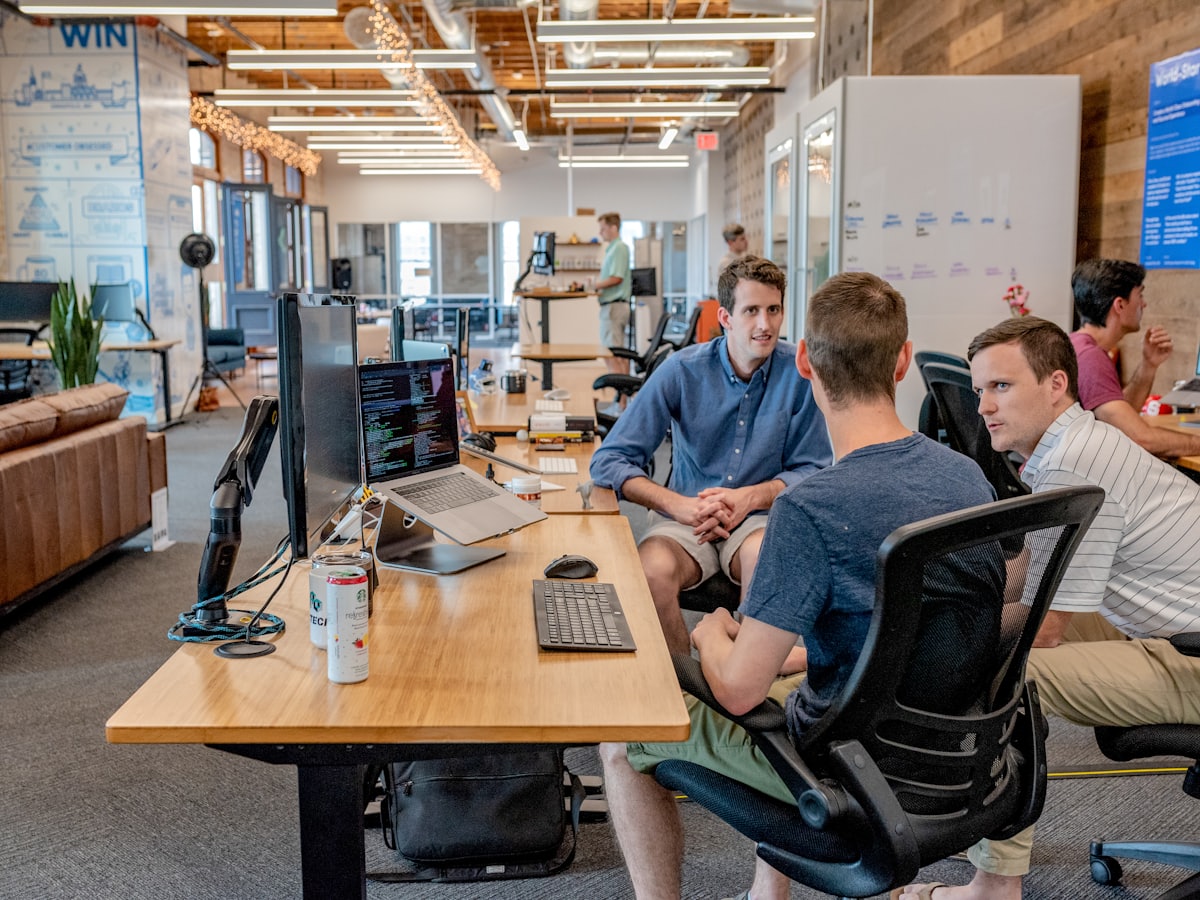
Ten years ago, an enterprise could simply out-staff a small competitor: more support agents, more marketers, more engineers. Global remote talent has quietly ended that advantage.
Buy capability, not headcount
An SME no longer needs a marketing department — it needs a great SEO specialist, a media buyer, and a designer, each dedicated, each senior, each at a fraction of local cost. Capability per dollar is the new battlefield, and it favours the nimble.
Where the leverage is highest
Customer support (respond faster than the giant), content and SEO (own the niche searches enterprises ignore), and operations (automate plus delegate what they solve with bureaucracy).
The SME playbook
- Hire one dedicated professional per critical function, not generalist departments.
- Keep strategy in-house; scale execution globally.
- Reinvest the 60% cost saving into growth, not overhead.
Most Zaynorix clients are exactly these ambitious SMEs — punching far above their weight with lean, global teams. See how they structure it on our Solutions page.
In practice: losing on paper, winning on Tuesday
A nine-person logistics-tech firm regularly bids against a listed competitor. On paper it’s absurd. In practice they win a third of head-to-heads, and lost-deal interviews reveal why: the enterprise’s proposals take three weeks and arrive generic; the SME’s arrive in four days, tailored, with the founder available on the call. Their support answers in minutes with real authority; the giant’s routes through a call tree. Their stack — a dedicated developer, a support pod, a marketing specialist, automation stitching it together — costs less monthly than one enterprise middle manager. Customers don’t buy org charts; they buy Tuesday-afternoon experiences. The SME simply engineered better Tuesdays: faster answers, faster proposals, faster fixes. Scale still wins the mega-tenders. Everything else is contested ground — and speed is the SME’s home turf.
Your competitive-stack checklist
- Pick two battlegrounds where incumbents are visibly slow.
- Publish response-time promises you can actually keep — then keep them.
- One dedicated owner per critical function before any new tools.
- Shorten decision loops: single owners, weekly review, default-to-action.
- Automate the repetitive loops your owners identify.
- Apply AI for drafts and triage under human supervision.
- Publish niche-deep content enterprises are too slow to approve.
- Collect and display speed proof: reviews mentioning response times.
Audit quarterly: where did we move faster than the giant this quarter? If the answer is nowhere, you’re competing on their terms — reposition before the next bid.
Speed: the advantage enterprises can’t buy back
Every layer of approval an enterprise adds is a gift to you. Where a corporate competitor needs a committee to change a landing page, your two-person growth pod ships the test by Friday. Weaponise this deliberately: shorten your decision loops (one owner per function, weekly review, default-to-action), publish content on trends while enterprises are still drafting compliance-approved statements, and let support resolve issues on first contact with real authority. Customers experience speed as competence. An SME with global talent and fast loops routinely out-executes a competitor with fifty times the headcount — because headcount was never the bottleneck; permission was.
Building your “unfair” stack on a small budget
The modern SME stack: one dedicated professional per critical function (support, marketing execution, finance ops, development), automation stitching the tools together, and AI assistance drafting the repetitive 60% of everything. This trio — global talent, automation, AI — collapses the cost of capabilities that required departments a decade ago. Practical sequence: delegate first (a human who owns the function), automate second (the human identifies the repetitive loops), apply AI third (the human supervises quality). Businesses that attempt the reverse — tools before owners — accumulate subscriptions instead of outcomes. Owners first; leverage second. That order is the entire playbook.
Frequently asked questions
Where do SMEs most often out-compete enterprises?
Response time, niche content depth, personal customer relationships, and pricing agility. Pick the two where your industry’s giants are visibly slow, and make them your public reputation.
Isn’t enterprise scale itself an advantage?
In procurement and distribution, yes. In execution speed, customer intimacy, and adaptation, scale is a tax. Compete where scale hurts them, not where it helps them.
What’s a realistic first “enterprise-grade” capability to build?
A genuinely fast, humane support function — one dedicated Zaynorix support professional plus documented processes gives most SMEs measurably better response times than their largest competitor within a month.
Which enterprise advantage should SMEs not try to fight?
Procurement-driven mega-tenders and distribution muscle — contests where scale is the entry ticket. Cede those gracefully and dominate everywhere response time, niche depth, and founder access decide: the majority of most markets, as it happens.
How small is too small to build a global remote team?
A solo founder with one part-time dedicated professional is already a global team — and often the highest-leverage version. The model scales down to twenty hours a week precisely so headcount never gates capability.
The bottom line
Global talent flattened the capability gap; speed and intimacy remain structurally on the SME’s side. A stack of dedicated owners, automation, and supervised AI — assembled in that order — routinely out-executes organisations fifty times larger, because customers buy Tuesday-afternoon experiences, not org charts.
The competitive doctrine:
- Compete where scale is a tax: speed, depth, relationships.
- Owners before tools; automation second; AI third.
- Publish response-time promises and keep them publicly.
- Audit quarterly: where did we outrun the giant?
The enterprise-grade stack is now assembled role by role: a support pod, a marketing specialist, a developer — each dedicated, each affordable. Start with the function that wins you customers.